Brandt Computational Discovery
Physics-based computational discovery
Physics-based computational drug discovery.
Brandt Computational Discovery helps academic researchers, biotechnology companies, and pharmaceutical organizations improve decision-making through molecular modeling, structure-based drug design, virtual screening, molecular simulation, free-energy calculations, and carefully selected AI-assisted methods.
100M+
compound virtual-screening capability
Peer-reviewed
computational and experimental research
Target breadth
GPCRs, transporters, enzymes, antimicrobial targets, and PPIs
Computational expertise
Methods selected for scientific confidence, not novelty alone.
Each project combines complementary computational approaches—docking, dynamics, free energy calculations, structural biology, and AI-assisted prediction—according to the target, data quality, and experimental question.
Ultra-large virtual screening
Screening workflows for libraries containing hundreds of millions to billions of compounds, with staged triage for tractable downstream validation.
Structure-based design
Molecular docking, pharmacophore modeling, binding-pocket analysis, and medicinal chemistry support for rational compound design.
Molecular simulation
Molecular dynamics, trajectory analysis, and FEP+ calculations to investigate stability, interactions, conformational changes, and binding free-energy hypotheses.
Selected AI methods
Boltz-2, AlphaFold, and related structure-prediction tools are incorporated when they strengthen—not replace—physics-based modeling decisions.
Lead optimization
ADMET prediction, SAR interpretation, computational medicinal chemistry, and hit-to-lead prioritization for experimentally testable programs.
Custom workflows
Computational workflow development, scientific consulting, grant collaborations, and educational workshops for research teams.
Integrated computational workflow
Multiple methods converge before compounds move forward.
Docking, molecular dynamics, free energy calculations, protein structure prediction, and experimental data are evaluated together to improve confidence in hit identification and lead optimization.
01 / Structure
Experimental structures, homology models, AlphaFold, or Boltz-2 inputs are prepared with target-specific scrutiny.
02 / Screen
Virtual screening, molecular docking, pose review, and pharmacophore filters identify chemical matter worth deeper analysis.
03 / Dynamics
MD simulations interrogate protein flexibility, ligand stability, water networks, conformational changes, and binding hypotheses.
04 / Energetics
FEP+ calculations and interaction analysis prioritize compounds with stronger mechanistic support.
05 / Validate
Ranked compounds and design hypotheses are translated into experimentally actionable priorities.
molecular docking
FEP+
ADMET
protein structure prediction
Method philosophy
Physics-based first. AI-assisted where useful.
The core of our work is grounded in structural biology, molecular mechanics, docking, molecular dynamics, and free-energy methods. AI-based tools such as Boltz-2 and AlphaFold are incorporated selectively to support structure prediction, binding-pose assessment, and hypothesis generation. They complement rather than replace rigorous computational chemistry.
Services
Computational Services
Each workflow is designed around the target biology, available structural data, experimental evidence, project stage, and decision that needs to be made.
Ultra-large virtual screening
Library triage and staged prioritization for very large compound collections.
Molecular docking
Pose generation, scoring review, and binding-mode hypothesis development.
Molecular dynamics simulations
Trajectory-based analysis of stability, conformational sampling, and interactions.
Free energy perturbation using FEP+
Relative binding free-energy support for optimization decisions when appropriate.
Protein structure modeling and prediction
Model preparation and structural assessment for discovery-relevant hypotheses.
Boltz-2 and AlphaFold-assisted workflows
Selective AI support for structures, poses, and hypothesis generation.
Hit identification and compound prioritization
Ranking compounds by mechanistic fit, tractability, and experimental actionability.
Hit-to-lead and lead-optimization support
Design prioritization around SAR, binding hypotheses, and developability constraints.
ADMET and physicochemical-property assessment
Computational filters for risk, developability, and chemical-series decisions.
Computational medicinal chemistry
Structure-aware support for analog design, SAR interpretation, and prioritization.
Custom workflow development
Project-specific computational pipelines for repeatable scientific decisions.
Scientific consulting and collaborative research
Advisory and collaborative support for academic and industry discovery programs.
Selected programs
Selected Discovery Programs
Examples are presented at a non-confidential level and avoid disclosing compound structures, client information, or unpublished details.
SGLT2 inhibitor discovery
Target or system: SGLT2 transporter
Scientific objective: identify inhibitor candidates with endothelial-protective potential. Computational workflow: structure-guided modeling and prioritization. Experimental collaboration: combined computational and experimental approach. Outcome or publication: Journal of Basic and Clinical Physiology and Pharmacology, 2026.
Carbonic anhydrase inhibitor discovery
Target or system: carbonic anhydrase I and II
Scientific objective: identify novel inhibitors through high-throughput virtual screening. Computational workflow: virtual screening and structure-based prioritization. Experimental collaboration: X-ray crystallography validation. Outcome or publication: ChemMedChem, accepted 2026.
RecA antimicrobial discovery
Target or system: antimicrobial DNA-repair target
Scientific objective: support antimicrobial hit discovery without disclosing confidential chemical matter. Computational workflow: binding-site analysis, docking, and prioritization. Experimental collaboration: designed for validation by partner laboratories. Outcome or publication: non-confidential program summary.
TAAR1 receptor drug discovery
TARGET OR SYSTEM: TRACE AMINE-ASSOCIATED RECEPTOR 1
Scientific objective: model receptor activation, ligand recognition, and signaling-relevant conformational states. Computational workflow: structure modeling, molecular docking, molecular dynamics, analog prioritization, and interaction analysis. Experimental collaboration: pharmacology-focused validation. Outcome or publication: active collaborative discovery program.
EGFR mutant-selective inhibitor research
Target or system: EGFR kinase mutants
Scientific objective: expand the scope of mutant-selective bivalent Type V kinase inhibitors. Computational workflow: structural analysis and inhibitor design support. Experimental collaboration: medicinal chemistry and biological evaluation. Outcome or publication: Journal of Medicinal Chemistry, 2024.
5-HT2A receptor ligand discovery
TARGET OR SYSTEM: SEROTONIN 5-HT2A RECEPTOR
Scientific objective: identify novel ligands and chemically distinct scaffolds through ultra-large virtual screening. Computational workflow: staged docking, expanded-sampling pose analysis, molecular dynamics, and FEP+ where appropriate. Experimental collaboration: planned validation through synthesis and receptor testing. Outcome or publication: active non-confidential discovery program.
Target coverage
Experience across structurally complex therapeutic targets.
GPCRs
transporters
enzymes
kinases
antimicrobial targets
protein–protein interactions
Projects are framed around the biology and available evidence: receptor conformational states, crystal structures, cryo-EM models, mutagenesis data, SAR, assay context, and medicinal chemistry constraints.
Collaboration model
Research collaborations without placeholder logos.
Research collaborations span structural biology, medicinal chemistry, pharmacology, crystallography, computational chemistry, and experimental validation across academic and scientific organizations worldwide. Institutional or company logos are not displayed unless permission has been explicitly confirmed.
structural biology
medicinal chemistry
pharmacology
crystallography
experimental validation

Founder
Asher Brandt, Ph.D.
Founder and Principal Scientist
Asher Brandt is a computational chemist and molecular pharmacologist specializing in structure-based drug discovery, molecular simulation, virtual screening, and computational medicinal chemistry. His research has included peer-reviewed computational and experimentally validated studies across GPCRs, transporters, enzymes, antimicrobial targets, and protein–protein interactions. He collaborates internationally with structural biologists, medicinal chemists, pharmacologists, crystallographers, and academic research groups.
molecular simulation
virtual screening
computational medicinal chemistry
Peer-reviewed credibility
Research contributions include computational discovery followed by experimental validation, supporting publication-quality scientific questions and collaborative programs.
Services for discovery teams
Virtual screening, computational medicinal chemistry, docking, molecular dynamics, FEP+, protein structure prediction, hit-to-lead optimization, and workflow development.
Consulting, grants, workshops
Scientific consulting, collaborative research partnerships, grant collaborations, and educational workshops tailored to experimental and computational teams.
Publications
Selected Publications
Selected research spanning virtual screening, structure-based drug design, GPCR modeling, molecular docking, medicinal chemistry, and experimentally validated computational discovery.
Novel Inhibitors of Carbonic Anhydrase I and II Identified by High Throughput Virtual Screening and Validated by X-Ray Crystallography
Virtual screening • X-ray crystallography
Novel SGLT2 inhibitors with endothelial-protective potential: a combined computational and experimental approach
SGLT2 • computational / experimental
Tilting the Scales toward EGFR Mutant Selectivity: Expanding the Scope of Bivalent Type V Kinase Inhibitors
Kinase inhibitors • EGFR selectivity
Serotonin 2A Receptor (5-HT2AR) Activation by 25H-NBOMe Positional Isomers: In Vitro Functional Evaluation and Molecular Docking
5-HT2A • molecular docking
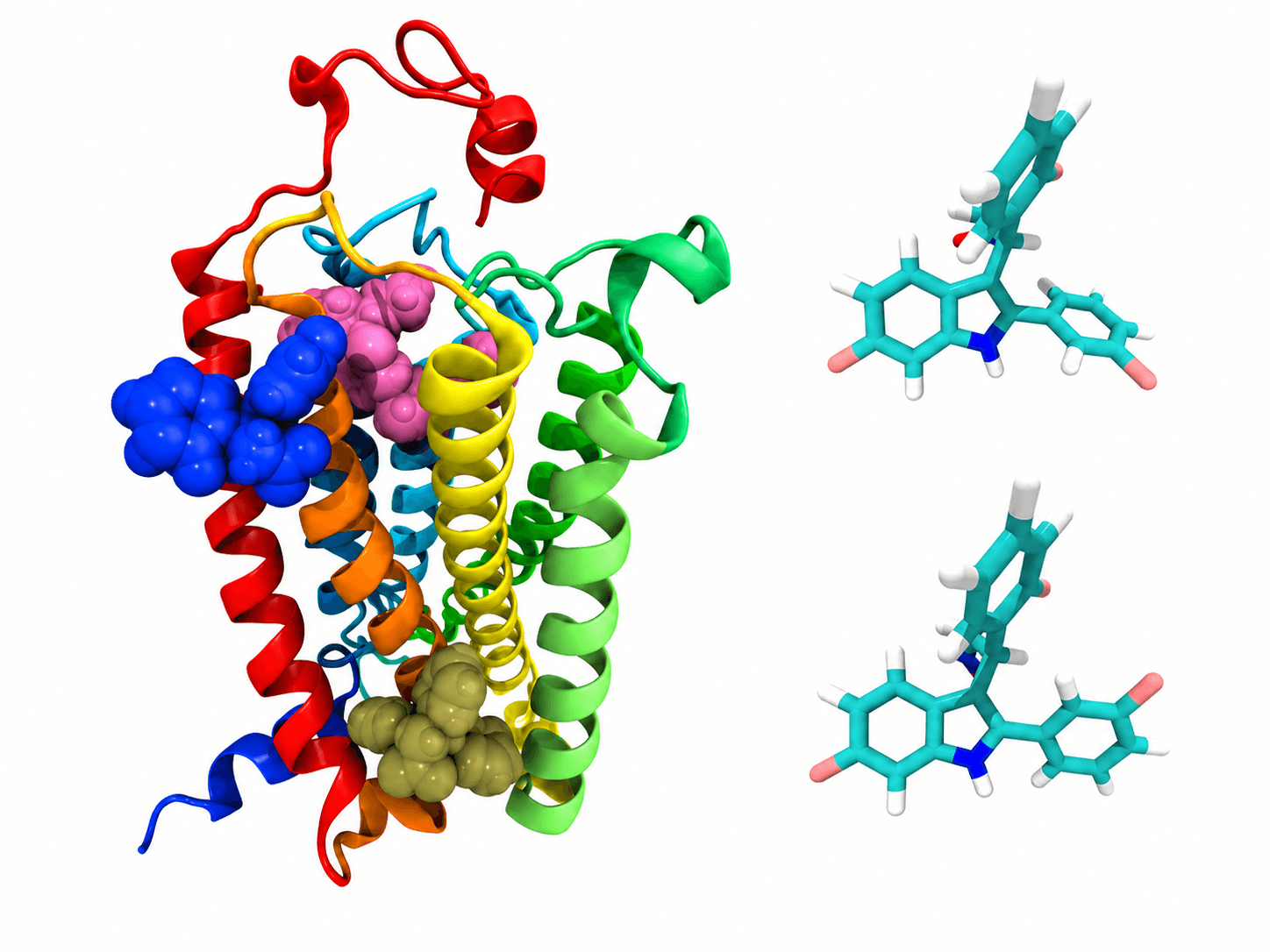
Application of Fluorine- and Nitrogen-Walk Approaches: Defining the Structural and Functional Diversity of 2-Phenylindole Class of Cannabinoid 1 Receptor Positive Allosteric Modulators
CB1 receptor • medicinal chemistry
View Full Publication Record